
Reducing our Carbon Footprint
Our Commitment to Net Zero
At SoloProtect, we're committed to reducing the environmental impact of our operations, products and supply chain, while continuing to deliver the reliable lone worker safety solutions our customers depend on.
Our goal is to achieve net zero greenhouse gas emissions by 2050 at the latest, and sooner where practical and credible.
We've established a measured 2025 emissions baseline covering Scope 1, Scope 2 and relevant Scope 3 emissions. This helps us understand where our environmental impact is greatest and focus our efforts on meaningful reductions.
Our Carbon Reduction Targets
- 2026: Reduce total gross greenhouse gas emissions by 10% against our 2025 baseline.
- 2030: Reduce emissions associated with our product devices by 25% against our 2025 baseline.
- 2050: Achieve net zero greenhouse gas emissions at the latest.
These targets form part of our Carbon Reduction Plan, which sets out how we intend to measure and reduce our environmental impact.
How We're Reducing Our Carbon Footprint
Our approach focuses on the areas where we can make the greatest difference.
Extending Product Life and Reducing Waste
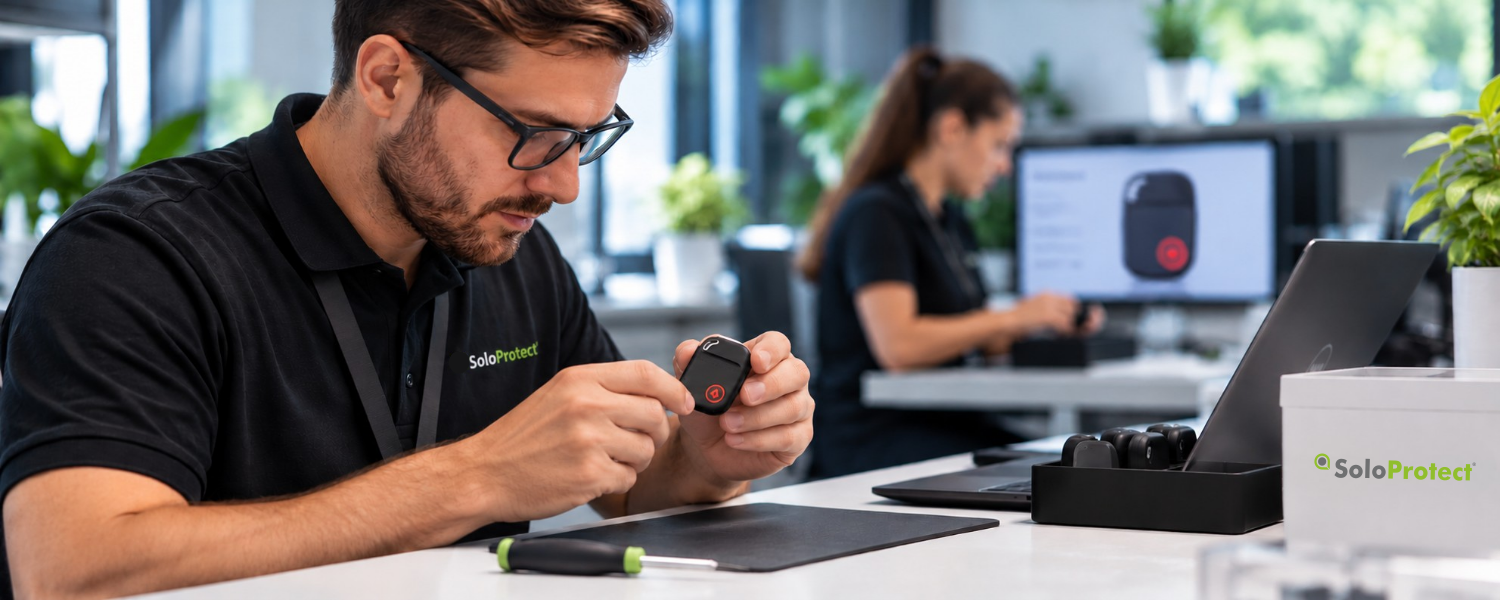
The manufacture of our lone worker devices is a significant contributor to our carbon footprint.
We're focusing on extending product life wherever devices remain safe, reliable, secure and compliant. This includes increasing opportunities for refurbishment, redeployment, component recovery and responsible recycling.
We're also considering how product design can reduce environmental impact, from materials and batteries to packaging, repairability and energy consumption.
Working With Our Suppliers
Reducing emissions across our supply chain is an important part of achieving our targets.
We're working towards closer collaboration with manufacturers and suppliers to better understand the environmental impact of our products, improve the accuracy of emissions data and support credible carbon reduction initiatives.
Reducing Emissions From Our Operations
We're continuing to identify opportunities to reduce emissions from our day-to-day operations, including:
- Improving energy efficiency and assessing lower-carbon electricity options.
- Managing refrigerants effectively.
- Making more efficient use of cloud and digital resources.
- Reducing unnecessary business travel through virtual meetings and better journey planning.
- Consolidating non-urgent shipments to improve logistics efficiency.
Measuring and Improving Our Progress
Accurate data is essential to understanding our environmental impact and measuring progress.
We're working to improve the quality of our greenhouse gas emissions data, particularly across our supply chain, so that future reporting increasingly reflects actual activities and supplier-specific information.
This will help us identify further opportunities for reduction and assess our progress against our targets.
Responsible Carbon Reduction
Our priority is to achieve genuine reductions in greenhouse gas emissions across our operations and value chain.
However, environmental improvements must never compromise the safety, reliability, security or regulatory compliance of our lone worker safety solutions.
We're developing our near-term targets with reference to the Science Based Targets initiative (SBTi) criteria. Our targets have not currently been validated by SBTi, and we will only describe them as validated if formal approval is achieved.
Read Our Carbon Reduction Plan
For more information about our emissions baseline, reduction targets and planned initiatives, read our full Carbon Reduction Plan.


